Oppression in Mathematics?

Even though I completed all three readings and watched Dr. Russell’s lecture, I still found it challenging to identify ways in which the teaching and learning of mathematics have been oppressive or discriminatory in my experience. I grew up in Swift Current, which had a predominantly white population, so the emphasis placed on Eurocentric ideas was normal to me and I was never forced to think otherwise. Now that I have been exposed to some different worldviews in university, I can reflect on the oppression and discrimination that occurred in my schooling more easily. This being said, I still have to consciously think about ways that oppression and discrimination were covertly displayed because I was so blind to it at the time.

One of the ways that I remember mathematics being oppressive was through the names and situations that were used in word problems. The majority of word problems that were in textbooks and on worksheets included names that are predominantly found in white culture. I am a part of white culture, so this did not seem like a big deal to me. I also tended to focus on the numbers in the word problem, and did not pay attention to the names or storyline that was included in the problem. The situations that occurred in the majority of word problems were usually situations that related to the Canadian experience in some way. An example of this could be measuring snowfall overnight. These seem like insignificant problems, but to someone who does not have a stereotypically white name or is unfamiliar with living in Canada, they are significant as it is another way to make them feel like they do not belong.
Another way that I remember mathematics being oppressive was how teachers never exposed us to other mathematical bases besides base-10 and only taught us to add, subtract, and divide right to left instead of left to right. In my first year, I took math 101 and we learned that different methods for completing math problems were used in different cultures, and I remember wondering why we had never learned about alternate ways before. Simply using the base-10 system could have been oppressive to students that were of a different culture, and they could have struggled with mathematical concepts with no help from the teachers. The same can be applied to students who were used to completing math problems right to left.
One way in which Inuit mathematics challenges the Eurocentric purpose and way of learning mathematics is by using an oral numeration system. In the Eurocentric view, ideas are only important and factual if they are written down, but the oral numeration in Inuit mathematics shows that mathematical ideas can still be factual even if they are not written down. The oral numeration system is context-based, which is beneficial because “the Inuktitut speaker is always mindful of being understood by others” (Poirier, 2007, p. 57), so there is less room for misunderstandings. Another way in which Inuit mathematics challenges Eurocentric mathematical ideas is by how Inuit people “have learned to ‘read’ snow banks and assess the direction of winds” (Poirier, 2007, p. 59). The mathematics that is taught in most Canadian schools does not have an obvious practical application in the real world. The Inuit people rely on being able to mathematically “read” their surroundings for survival, something that most Canadian children do not need to worry about. A final way in which Inuit mathematics challenges Eurocentric ideas is by the way that they set up their calendar. This is another way that Inuit people have created a mathematical system that is practical to their lives. The Eurocentric idea of a calendar is to split the number of days we have in a year into months as evenly as possible. However, the Inuit split their year into months based on “how long it takes for a natural event to take place” (Poirier, 2007, p. 62). This makes a lot of sense because tasks that need to be done change with the natural events that are occurring and are dependent on what season it is. This does not mean that the Eurocentric ideas of mathematics are inferior, but simply that Inuit mathematics are also valid.
The Importance of Eurocentric Ways of Showing Respect in a Classroom
I think the aspects of my schooling that had the biggest impact on how I read the world were found in the hidden curriculum. One key example that is apparent to me is the significance placed on respect in all of the classrooms I have ever been in. I distinctly remember sitting on the carpet as a group in elementary school, collectively creating a list of different ways that we could show respect. In middle school and high school, it was expected that students were to independently remember and use the ways of being respectful that were learned in elementary school. I now value respect in my adult life. I believe that every person should be treated with respect, regardless of who they are or their position in society. However, I believe that if they are not returning the respect, then they are not deserving of respect anymore.
Although I think learning ways to show respect was a very important aspect of my schooling, I do recognize that there was an emphasis placed on Euro-Canadian ways of showing respect. One example is making eye contact with the teacher to show respect. In some non-European cultures, it is actually disrespectful to make eye contact with a person in an authority position; a lack of eye contact is considered a way of showing respect. Another example is the act of posing questions to aid in understanding while the teacher is lecturing. In our Canadian culture, asking questions is a way to show engagement and respect for the hard work that a teacher has put into teaching the lesson. When a student asks a question, it means they care about actually understanding what the teacher is teaching. However, in other cultures, posing questions towards an authority figure shows disrespect. Other cultures perceive asking questions equivalent to questioning the teacher’s expertise and authority position. Needless to say, Euro-Canadian perspectives were the perspectives that were addressed and mattered the most in my schooling experience.

I think because of my schooling, I have the risk of bringing in a eurocentric lens to my classroom when I am a teacher if I am not careful to be aware of this bias. For example, if I do not pay attention to this bias, I may unconsciously enforce Euro-Canadian ways of showing respect from my students and may be quick to label actions that do not fall into this eurocentric lens as disrespectful. This eurocentric lens can be applied to many aspects in schooling. Another example could be ways of learning. I think the first step in working against this bias is recognizing that I have this bias. I do not think it is possible for me to ever completely unlearn this bias because it has been enforced upon me for so long, but it is definitely possible for me to work against it. A second step in working against this bias is recognizing that all my students are unique and come from diverse backgrounds. This is why I appreciate how Kumashiro recommended getting to know your students. One quote that resonated with me is:
We would discuss the dangers of presuming that we as teachers ever know “enough” about our students and do not have more homework to do, such as when we design a lesson for students whom we expect to be interested in certain things (Kumashiro, 2009, p. 77).
I think it is also important to be explicit about the lenses that teachers bring into the classroom as well. This creates an atmosphere of honesty, and allows students the chance to hold the teacher accountable for the information and materials that they present in class. A good quote from the Kumashiro (2009) reading to emphasize this point and sum up this discussion is:
Although such an approach to teaching would require of teachers a level of vulnerability that we do not often expect in the classroom, perhaps it would also model for students what it means to look beyond the lesson (p. 78).
Personally Responsible Citizenship Education Experiences
I was sitting at my desk trying to think of examples of citizenship education from my schooling experience, and genuinely had a difficult time trying to think of any. I am not sure if my teachers did not plan any memorable activities that promoted citizenship education or if they simply did not try very hard to integrate it, but I feel like the examples that I did come up with are fairly feeble. I remember in my wellness 9 and 10 classes, it was a requirement to engage in 10 hours of volunteer work. I can no longer remember what kind of volunteering experiences I took part in, but I do recall my teacher mentioning this assignment scarcely on the first day of classes and occasionally reminding us as the due date for completed hours drew nearer. I also remember other students asking the teacher why we needed to complete 10 hours of volunteer work, but the teacher never provided us with a direct answer. I think he may have explained that the assignment was supposed to instill a sense of giving back to the community in us, but because we never had a sufficient answer, all of us interpreted the assignment as unnecessary and a waste of time that we could be spending on other, more “important” homework for other more “important” classes.
Another example of citizenship education that I can recall from my schooling is the work experience class that I took in high school. This was an elective that I chose because I knew I was interested in taking education in university and becoming a teacher, so I wanted to get experience in the classroom as soon as possible. Before we were able to enter our workplace placements, we were required to do many independent study assignments on workplace ethics. I believe this was incredibly beneficial for me because I did not know a lot of these workplace rights previous to this class, so I now feel that I am more prepared to enter the workforce and will be employed in good positions and places because I understand the rights I have as an employee. I also feel like I am more prepared to identify discrimination that happens in the workplace, so I can be more of an aid to myself and others in being treated justly.
What Kind of Citizen?: The Politics of Educating for Democracy by Joel Westheimer and Joseph Kahne identifies three types of citizens. The three types include “the personally responsible citizen; the participatory citizen; and the justice oriented citizen” (p. 3). The personally responsible citizen is the citizen that “acts responsibly in his/her community by, for example, picking up litter, giving blood, recycling, obeying laws, and staying out of debt” (Westheimer & Kahne, p. 3). The participatory citizens are the citizens that “actively participate in the civic affairs and the social life of the community at local, state, and national levels” (Westheimer & Kahne, p. 4). The justice oriented citizens are the citizens that “use rhetoric and analysis that calls explicit attention to matters of injustice and to the importance of pursuing social justice” (Westheimer & Kahne, p. 4). I think both the required volunteer hours in my wellness 9 and 10 classes and my work experience class were examples of the personally responsible type of citizenship.
I think my experiences with citizenship education was focused on the individual aspect of being a “better” person. By this, I mean that I think the focus was on how good I felt when I was engaging in the volunteer hours and when I was learning about how to ensure my rights in a workplace, but the focus was not on what my actions were doing for other people. I think the individual aspect of citizenship education is an important aspect that does need to be recognized in schooling, but I think more attention needs to be placed on how our actions affect others. I also think teachers need to generally be more enthusiastic about citizenship education. A lot of teachers believe that the goal of schooling is to prepare the world’s youth for the adult world and living in our harsh society, so I think more time needs to be spent in schools on this preparation aspect.
Going Beyond Content
First of all, as Claire clearly stated, treaty education is a mandatory component of the curricula of each grade. Many teachers view treaty education as optional and unimportant, but that is not correct. Every student can benefit from treaty education, regardless of whether or not they are First Nations, Metis, or Inuit. I think many people forget that the treaties were signed by two parties: First Nation, Metis, and Inuit peoples and colonizing Europeans; the treaties are as pertinent to non-Indigenous people as they are to Indigenous people. Treaty education encourages students to adopt a sense of responsibility towards upholding the agreements made in the treaties, as well as a responsibility towards establishing good relationships between Europeans and First Nations, Metis, and Inuit people. Treaty education is also a way for the First Nation, Metis, and Inuit ways of knowing to be remembered. Unless these ways of knowing are actively acknowledged and taught, it is very easy for them to disappear in our Eurocentric country. Including treaty education in the curriculum is a display of respect for First Nation, Metis, and Inuit peoples, as well as a way to show that their ways of knowing have importance and significance.
I found Dwayne’s quote about how many Canadians with ancestors from European countries believe that they do not have a culture to be interesting. In my Sociology of Mental Illness class, we have been talking about what it means to be “normal”, and I think this concept can be applied in this circumstance. Canada is one of the most powerful countries in the world right now, and with this status may come feelings of superiority. Culture is often thought of in racialized terms; culture is often associated with people of colour. So, because people of colour are seen as inferior in the organization of our society, White Canadians like to believe that they do not have a culture to maintain their superiority. Therefore, making having no culture “normal”. Kumashiro’s ideas surrounding common sense can also be applied in this circumstance. White Canadians are never explicitly told that they have no culture, but it is an underlying idea that exists in everyone’s mind that is perpetuated by the social standings of each race in society. I believe that when students learn and identify the existence of their culture, it will make the concept of First Nation, Metis, and Inuit cultures less foreign and more “normal”.
I also really appreciated what Mike was saying about how treaty education goes beyond simply content. For treaty education to have a full effect on the students who are learning it, they must experience a personal connection to the material. In many other subject areas, teachers can strictly teach the material and students can write the test and forget all of the knowledge that they just learned, but treaty education should not be like this. Treaty education goes deeper than this superficial level and leaves an imprint on the students. I think about Claire’s story of the girl that was still thinking about the horrors that many First Nations, Metis, and Inuit people were exposed to in residential schools during a Terry Fox Run. Claire was able to engage with this material on a deeper level than the typical product model that occurs in many classrooms and connect with her students emotionally. This emotional response is what will help propel these students into forming better relationships between First Nations, Metis, and Inuit people and Europeans. This emotional response is what will forge a sense of respect in students for both Indigenous and European people. This emotional response is what will prove the importance and relevance that students can get out of the curriculum.
After listening and reading all of the material that was posted this week, I feel like I finally understand what the statement, “we are all treaty people”, means. I now understand that treaties are just as pertinent to Europeans as they are to First Nations, Metis, and Inuit people. I have also gained a greater understanding of why treaty education is included in the curriculum. Treaties are agreements that are meant to last forever, so the next generation constantly must uphold the agreements. It is a major responsibility, so it makes sense why treaty education is a mandatory component of each grade level’s curriculum. I also think about the importance of this statement within the hidden curriculum. Even if we, as teachers, are teaching the content included in the curriculum, our students are going to unconsciously acknowledge the attitudes we hold towards the content and begin to adopt them as well. If we present the material in a fun, engaging way, and we look excited about it, this is going to instill excitement in our students. However, if we present the material in a bland, monotonous way, and look annoyed about it, it is going to instill an unbothered attitude in our students. How we teach the content is just as important as what the content is.
An Expert-Dominated Approach to Curriculum Development
There are two discussions involved in the politics of curriculum: the overall shape of school curricula and the content of individual subjects (Levin, 2008, p. 14). Currently, curriculum development and implementation are decided by an expert-dominated approach (Levin, 2008, p. 17). Curriculum development processes include teachers of the subject, post-secondary subject experts, and “are often organized and to some degree directed by government officials from ministries of education” (Levin, 2008, p. 17). Typically in this process, the strengths and weaknesses of the current curricula are identified before attempting to arrive at a consensus on the recommendations for change that were proposed based on the weaknesses (Levin, 2008, p. 17). New curricula are usually fully developed before they are implemented into schools, but sometimes, they are prematurely released and then revised into final versions later (Levin, 2008, p. 17).
The curriculum is decided through an expert-dominated approach, but Levin incorporates a few critiques of this approach to curriculum development in his article. One criticism that Levin (2008) discusses is that “there may be intense lobbying by various interests as to who should be named to a working group” (p. 18). This relates to another disadvantage that Levin (2008) includes about “the clash between experts with competing views (p. 18). There may be intense disagreement about who is allowed to be involved in the curriculum development process because experts may have conflicting ideas, and will deem the process unfair if all the views are not addressed. Another related impediment to the expert approach is that “curriculum formation may also be linked to much more public political processes” (Levin, 2008, p. 18). This last critique relates both to the content included in the curriculum as well as the people responsible for creating it. There are many issues surrounding whether to include content regarding controversial issues, such as climate change or different sexualities. The inclusion of these topics depends heavily on whether or not the general public allows them to be topics discussed in schools. The public is having more and more influence in developing curriculum, and because most people have been to school, they think they completely understand education enough to have a voice in the topics that are included in the curriculum.
I found it surprising that even though subject teachers are included in the curriculum development process, the curriculum product is only effective if it is being taught by an expert. Many schools suffer from low budgets and need to use teachers cross-curricularly. Curricula should be written so that a teacher with any level of expertise can navigate it, and still allow for the teacher to implement their own creativity into how to teach the information. Also, after obtaining a degree in education, teachers are certified to teach any grade. This means that many teachers do not get hired for the grade that they are best trained for. This is another reason why curricula should be written for teachers of every level of expertise.
When I was in elementary school, I remember wondering why reference to Indigenous Peoples was made in every single class. Finally, in middle school, an elder came to talk to our class and told us that the reason why information on Indigenous Peoples was given in each subject was because of treaty education. After this presentation, it finally made sense why the topic of Indigenous Peoples was included in every subject in some way. I remember reading questions in math textbooks regarding Indigenous ways of living, and numerous discussions in social studies on colonization in Canada. The treaty outcomes and indicators appear greatly written in the document, but I think there is still a disconnection between the document and the information that is shared in classrooms. I learned a lot about the Indigenous way of life in my years in school, but there was little emphasis placed on the actual treaties. I had heard the phrase “we are all treaty people”, but none of my teachers had ever given any meaning to it. We learned the very basic components of what was negotiated in the treaties but were taught that they were really only applicable to Indigenous people. I think my schooling failed me in my treaty education because it continued to enforce a separation between colonizers and Indigenous Peoples, as well as belittled the significance of treaties in our lives.
Based on the critiques that Levin found with the expert-dominated approach, I can think of two main tensions that occurred in the creation of the treaty education curriculum. The first tension may have arisen as a result of the many different cultures within the overarching idea of Indigenous culture. Each diverse group of Indigenous people had a different experience with the treaties, so there are many conflicting expert opinions on the matter. It would have been challenging to decide which experts to include in the process, as each expert would have added their unique experience and opinion. Tensions may also have arisen because of the voice that the public has in curriculum matters. There are still people that are uncomfortable with their children learning topics that include Indigenous ways of life; some people want only European history to be discussed in schools. I suspect these were the two main tensions that arose when the treaty education curriculum was being created and implemented in schools. I also think these tensions are still applicable today.
“Oh the Places You’ll Go”: Bringing Local Places into Curriculum
The central reasoning for the project was “to communicate the messages to the wider community about the experiences and perspectives of youth, adults and elders, about the river” (p. 74). I believe this is an example of reinhabitation because communicating these messages about the river is a way of recovering the meaning of that space that Indigenous people had up until a couple of generations ago. These perspectives also give information to the wider community about how important the river is for the wellbeing of each individual and what it is contributing to the entire environment. Another example of reinhabitation that is included in this narrative is how “elders would share knowledge with youth about ways to live off the river and lands and note key sites along the way” (p. 75). This example does not relate to identifying, recovering, or creating a place, but it does relate to recovering lost knowledge and ways of living. The return of knowledge that allows us to live well in our environment allows for the identification and recovery of the places and spaces within our environment. A final example of reinhabitation that occurs in the narrative is how the “research project contributed to a community mapping of key cultural and historical sites” (p. 76). By mapping cultural and historical sites, this project helped to identify places and spaces that can teach ways of living that promote an individual’s wellbeing in their environment.
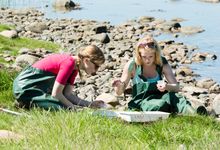
There are also examples of decolonization that occur throughout the narrative as well. The issue of language played a big part in the project, especially in the topics of language loss and traditional names for places. In the narrative, it states, “names for places in the Inninowuk language were marked as an effort to bring the original names and Cree concepts to more common use among the youth” (p. 76). The use of the Inninowuk names was a change directed towards the youth that was meant to deemphasize the importance of European languages that injured the Indigenous spirit of many people. This small change in language was a way to give power back to the Indigenous people whose culture has been incredibly disrespected by settling Europeans in the past. Another example of decolonization is the “intergenerational language loss” (p. 78). The intergenerational language loss has injured many Indigenous people as it is a separation from their culture. In this narrative, elders have accepted that there is a language loss and are actively trying to teach Indigenous youth the Cree language so that they can dismantle the importance that is placed on European languages in our society. A final example of decolonization is “territorial self-governance” (p. 79). The narrative explains that territorial self-governance is necessary because of extractive capitalism. The government is constantly making decisions regarding how to use land that is in Indigenous territory without consulting Indigenous people. The land and people are being exploited by the government when this occurs, so they are trying to implement territorial self-governance to change this harmful capitalist way of thinking.
I am in the pre-k to grade 5 elementary program, but I am especially interested in grade 1 or 2. I love the idea of using the space or place you are in to aid in your teaching. There is a lot of history behind the places that we live that largely gets ignored. Therefore, I think it is important to expose students to the history of the place that they live so that they can gain a connection to somewhere local instead of other places around the world that are typically taught in schools. I also think there is a lot to learn from the land itself. Our society has become very dependent on technological support, but I think it is also important to see what the natural world can do for us as well. To implement a successful place-based curriculum, it requires a teacher to take their students outside a lot. This can be within the school grounds or to different places on field trips depending on the students and resources available. I think getting students outside is a great first step in implementing a place-based curriculum so that they can immediately start forming connections between what they are seeing and the information that they are learning.
Are School Standards Inclusive of Every Student or Only the “Good Students”?
Kumashiro (2010) argues, “we often find comfort in commonsensical ideas that make sense of the status quo, just as we often feel uncomfortable with ideas that disrupt norms” (p. 27). This idea can be applied to how we react, as teachers, when a student behaves in a way that has been deemed “bad”. Often, teachers will become angry with the student(s) and instill a punishment to reestablish their authority, as well as to redirect the behaviour of the student(s) to exhibit “good” behaviour. The idea of a “good student” is quite consistent across every westernized school. Kumashiro (2010) states,
I remember consistently feeling quite frustrated by such students, not only because I assumed that being a student required behaving and thinking in only certain ways, but also because I felt pressure from schools and society to produce this type of student (p. 21).
Schools do place a lot of emphasis on reinforcing certain behaviours in the classroom and discouraging other behaviours. A reason for this could be that society has deemed certain behaviours as acceptable, and schools are trying to prepare students to be functional and accomplished members of this society when they leave school.
A “good student”, according to the commonsense, is a student who can learn the material presented to them in school. Currently, “the insistence on ‘meeting standards’ is an insistence on complying with what some in society have defined as common sense” (Kumashiro, 2010, p. 27). In education, standards have been set to communicate what knowledge students are supposed to acquire by the end of the school year before they advance to the next grade level. If a student is unable to achieve these standards, they become a “problem” or “bad” student in the view of the school. In present-day society, we tend to focus on instantaneous things; we do not have the patience to prolong our time to learn something. This is problematic in the classroom because some students take a longer time to understand information than their peers, and are essentially punished because of this. This idea of a “good student” only benefits the students who are quick-learners and have the support to focus their attention entirely on school and the subject material.
According to the commonsensical view, “educated students were those who ended the school year with more than they began, and effective teachers were those who helped fill students’ minds” (Kumashiro, 2010, p. 24). This is just another way of phrasing that “good students” are students who can learn quickly and effectively. A defect of this view is “that the standards . . . that currently define what all students are supposed to learn contain very little that explicitly addresses oppression” (Kumashiro, 2010, p. 27). Kumashiro (2010) further explains that this means that students are not learning about oppression in their studies, but I think this statement also means that the standards are not created concerning students who are facing oppression or disadvantage in their lives. The standards are not created for students with physical or cognitive disabilities. The standards are not created for students who live in poverty and are going to school on an empty stomach. The standards are not created for students who are dealing with trauma after being discriminated against because of their race, sexual orientation, or anything else. The standards are created for students that can solely focus on their studies and that have the support at home to aid them in their learning. So, if we continue to term “good students” as the students who can learn every standard that was created for them, then we are further harming the students who are needing the most support and attention.
Dehumanization Found in Standardized Testing and Scripted Curriculum
The idea of a standardized curriculum across each classroom in a country sounds like a good idea when looked at from a superficial viewpoint. Though a standardized curriculum does have benefits, many deficiencies appear when it is examined more thoroughly. In Wayne Au’s (2011) article entitled Teaching under the new Taylorism: high-stakes testing and the standardization of the 21st century curriculum, he states,
this paper offers a critical analysis of the changes made to teaching in modern times and argues that public school teachers in the US are teaching under what might be considered the ‘New Taylorism’, where their labour is controlled vis-à-vis high-stakes testing and pre-packaged, corporate curricula aimed specifically at teaching to the tests (p. 25).
Au (2011) argues that the combination of standardized testing and scripted curriculum in the classroom ultimately creates a factory production quality by asserting, “standardized tests themselves, through the inter-related processes of decontextualization, objectification, and commoditization, fundamentally provide the foundational basis for education to be framed as a form of factory production” (p. 26). Although Au (2011) does provide readers with a few positive aspects of a standardized approach to curriculum such as “to exasperate racial and class inequality in education” (p. 39), his main focus is on how “students and teachers are literally ‘objectified’ and turned into abstract numbers” (p. 37).
Au divided his paper into five topics, excluding the introduction and conclusion. These topics include scientifically-managed education, scientific management or ‘social efficiency’, high-stakes testing and the standardization of teaching in the US, high-stakes testing and the logics of the new Taylorism, and standardized testing and the educational assembly line. An interesting quote from Au (2011) that occurs within the scientifically-managed education section of his paper is, “it dehumanized their relationship to teaching and students by alienating them from their own creativity and intellectual curiosity” (p. 28). This statement explains the effect that a standardized (or factory production) approach has on both the relationships that are established in a classroom and the amount of variance and creativity necessary for each students’ proper understanding. No two human beings are the same in every way, so utilizing one standardized or scripted curriculum removes all of the qualities that are viewed as ‘human’ in a classroom, and replaces them with mechanical qualities. As Au (2011) states, “standardized testing creates the capacity to view students as things, as quantities apart from their human qualities” (p. 37). If the human qualities of teachers and students are no longer being recognized or appreciated, then what purpose does the standardized knowledge, or education in general, have?
This is a summary of the basic arguments that Wayne Au made in his article on standardized testing and scripted curriculum. I have already identified two other articles to compare to this one. The two articles I have chosen are “I’m not teaching English, I’m teaching something else!: How new teachers create curriculum under mandates of educational reform and A democratic critique of scripted curriculum. My next step in this assignment is to read each of these articles in their entirety and take notes on ideas they provide that are similar or different to the ideas provided in Au’s article. Then, I will begin to construct my paper. I will use the paragraphs I have already written and add a little more information to that. After this, I will finish by writing the comparative section.
Au, W. (2011). Teaching under the new Taylorism: High-stakes testing and the standardization of the 21st century curriculum. Journal of Curriculum Studies, 43(1), 25-45.
Traditionalist Perspective Reading Response
In Smith’s (2000) article, it states, “the work of Ralph W. Tyler, in particular, has made a lasting impression on curriculum theory and practice” (pp. 3-4). Smith (2000) then proceeds by describing the four fundamental questions that Tyler’s theory was based on,
- What educational purposes should the school seek to attain?
- What educational experiences can be provided that are likely to attain these purposes?
- How can these educational experiences be effectively organized?
- How can we determine whether these purposes are being attained? (p. 4).
These questions can be expressed through a procedure that is typical of many Canadian, and other countries’, classrooms. This procedure is broken down into seven steps consisting of diagnosis of need, formulation of objectives, selection of content, organization of content, selection of learning experiences, organization of learning experiences, and determination of what to evaluate and of the ways and means of doing it (Smith, 2000, p. 4).
Tyler’s theory coincides with the curriculum as a product perspective of curriculum. This perspective places a greater emphasis on the product that a student presents for evaluation compared to the process that the student engaged in to arrive at the final product. This perspective was used frequently throughout my entire school experience. One example occurred in my tenth-grade physical education class. The class was engaging in a unit on tennis, and we were being graded on whether or not we could serve the tennis ball into a certain area of the tennis court. We were supposed to report the number of times our partner’s ball landed in the area to the teacher who was sitting on the sidelines, not paying any attention to us. The teacher did not observe our form or any other part of the process that we were engaging in to complete the task and develop the final product. I received a 40% in this unit because even though I was trying my best in the process of serving a tennis ball, I was not successful in the final product of serving the ball into a certain area on the court.
Another example that comes to my mind when I think about how I experienced Tyler’s theory in school is the “mad minutes” we did in math class. I remember the anticipation that used to grow within me as I watched the teacher walk around the classroom handing out single pages filled with math problems that we were to solve within one minute. This activity was meant to test how quickly we could do mental math as well as how well we were understanding the mathematical operations being taught in class. I think the perspective failed to recognize that some students did not perform well on these “mad minutes” simply because they were experiencing test anxiety, not because they did not understand the concepts. The entire process and the pressure that accompanied it was not acknowledged, and once again the final product was the only part that importance was placed upon.
A final example of how I experienced Tyler’s theory in my school experiences is in every math class I have ever taken. The way that my math classes were set up directly reflects the procedure that is listed above. Typically in my math classes, we dedicated one period to learning one chapter within the unit and another period to doing practice problems corresponding to that chapter. We repeated this pattern until the last chapter had been discussed, then we would have one review period followed by a unit test the next period. We, as students, were subjected to the organization of content as well as the final evaluation of the content. The consistent pattern of math periods reflects the teachers’ reliance on Tyler’s theory of curriculum.
One limitation of Tyler’s theory is “that the plan or programme assumes great importance” (Smith, 2000, p. 4). In school, I always heard teachers complain that we were “falling behind”. This perspective places a greater emphasis on following a set plan to ensure that all of the content matter is taught instead of whether or not students are understanding the content matter. This can cause students to feel overwhelmed and be less proficient learners because the teacher is teaching the content too quickly. Another limitation is that “it implies that behaviour can be objectively, mechanistically measured” (Smith, 2000, p. 5). This is a limitation because it enforces a dichotomy between right and wrong behaviours, even though there can be a “grey area” in the middle. Every student is unique with diverse experiences and it is unfair for teachers to expect the same behaviours to be expressed in the same ways from each student. A third limitation is “the lack of impact on actual pedagogic practice of objectives” (Smith, 2000, p. 5). The expectations for what children are to accomplish by the end of the school year have become so standardized across Canada, and many other countries, that teachers have a difficult time trying to implement their own pedagogical views in the classroom. A final limitation is that both teachers and students “overlook learning that is occurring as a result of their interactions” (Smith, 2000, p. 5). This perspective only focuses on the standardized objectives but fails to acknowledge the variance in learning that interactions within the classroom bring.
There have been plenty of limitations listed regarding Tyler’s theory, however, there are some potential benefits as well. One benefit is that it is “systematic and has considerable organizing power” (Smith, 2000, p. 4). I talked at length about how the standardization of this perspective is a drawback, but it is also a strength as it allows each child to receive the same quality of education regardless of their background. The incredible organization that is viewed within this perspective can also be a strength, as it aids in the smooth running of occurrences in the classroom. Another potential benefit is “the formulation of behavioural objectives – providing a clear notion of outcome so that content and method may be organized and the results evaluated” (Smith, 2000, p. 4). Through the use of clear and standardized behavioural objectives, students are aware of the expectations that are placed on them and understand what they need to accomplish by the end of the school year.
Smith, M. K. (1996, 2000). ‘Curriculum theory and practice’ the encyclopaedia of informal education. Retrieved from http://www.infed.org/biblio/b-curric.htm.

